What Causes Slab Leaks in Arizona
Slab leaks in Arizona most often come from corrosion inside aging water lines, soil that shifts under the slab, and pressure stress on joints and bends. Long hot summers, hard water, and the way many Arizona homes were built all add wear to the lines under the floor.
What is actually failing under the slab?
A slab leak starts when a water line under or inside your concrete slab develops a hole, a crack, or a loose joint. The line itself may be copper, or another pipe material used when the home was built. Water escapes through that opening and soaks the concrete and soil around it.
Most leaks do not come from one sudden event. They come from slow wear over a long time. A line that carried hard water for years, sat in shifting soil, or rubbed against concrete at a bend can thin out or stress at one point until it gives way. The leak often starts as a pinhole and grows from there.
Knowing the cause matters because it shapes the fix. A single pinhole in an otherwise sound line calls for a different answer than a line that has thinned along its whole run. Detection finds the leak, and the condition of the line shapes what comes next.
How does hard water wear out pipes?
Arizona water runs hard in many areas, which means it carries a high level of dissolved minerals. Over time, those minerals can build up inside a water line and change how water flows. The buildup can narrow the line, raise pressure at some points, and set up spots where corrosion takes hold.
Corrosion eats into pipe walls from the inside. In copper lines, it can pit the surface until a pinhole opens. The process runs slowly and out of sight, so a line can look fine from the outside while the inside thins. A leak often appears at the thinnest point first.
Homes that have had hard water for many years carry more of this wear. If your fixtures show white scale, your dishes spot, or your water heater has needed work, your lines have lived in the same water. A softener or treatment setup can help the water that reaches your pipes, and a plumber can talk through options for your home.
How does Arizona soil shift under a slab?
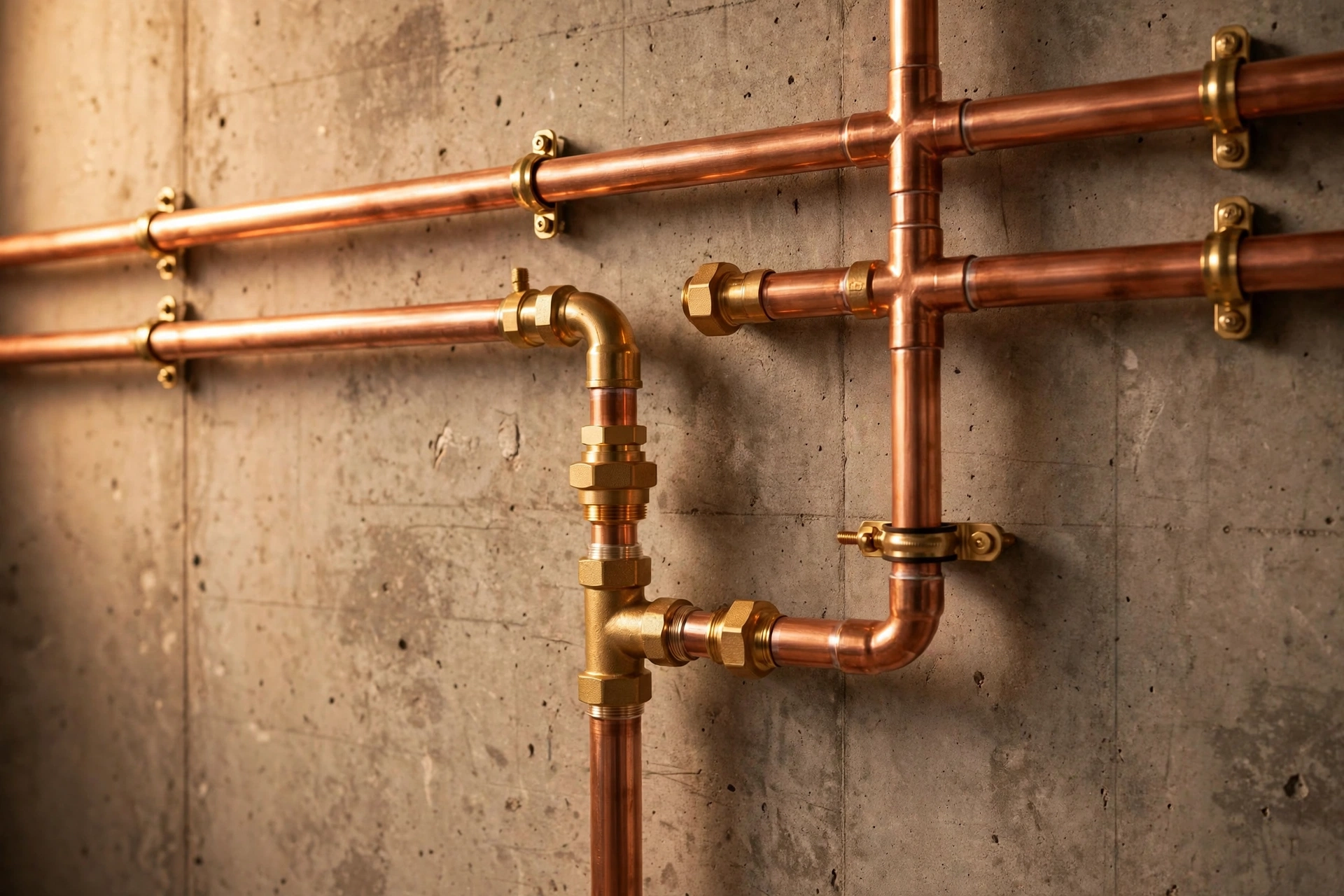
Much of Arizona sits on soil that swells when it takes on water and shrinks when it dries. Monsoon rain, irrigation, a leaking hose bibb, or a leak itself can wet the soil under one part of a slab while the rest stays dry. The wet soil swells and lifts, the dry soil settles, and the slab moves with it.
That movement stresses the lines under the slab. A line that was laid straight can bend slightly at a joint. A joint that was tight can loosen. Over many wet and dry cycles, the stress adds up. Homes on sloped lots, near washes, or on fill soil can see more movement than homes on flat, stable ground.
You cannot stop the soil from changing with the seasons, but you can keep water away from the slab. Grade soil so rain runs away from the home, keep irrigation heads aimed at plants rather than walls, and fix outdoor leaks fast. Less water near the slab means less swelling and settling under it.
How do heat and temperature swings stress pipes?
Arizona homes live through long hot summers and cooler winters, and the pipes under a slab live through those swings too. Hot water lines expand when they heat and contract when they cool. Cold lines shift less, but they still respond to the soil temperature around them.
Each cycle of expansion and contraction rubs the line against concrete, gravel, or a bend in the run. Over many years, that rubbing can wear a thin spot, most often where the line turns, passes through the slab, or meets a fitting. That is why leaks often show up at bends and joints rather than in the middle of a straight run.
Attic and garage runs face even sharper swings, because those spaces heat up fast in summer. Lines that run through hot spaces can age faster than lines that stay in cooler ground. Insulation and routing help, and a reroute can move a line out of a harsh run into a kinder one.
How does age and installation wear add up?
Pipes age like everything else in a home. A line installed decades ago has carried water through thousands of heating cycles, pressure shifts, and soil moves. Joints, fittings, and bends carry the most wear because they take the most stress.
Installation details matter too. A line that was kinked during install, laid against sharp gravel, or bent too tightly at a turn starts life with a weak point. A fitting that was not seated well can loosen over time. These weak points may hold for years, then fail after a pressure spike or a soil shift.
Age alone does not mean a line will fail. Many older lines still serve well. Age plus hard water, shifting soil, and heat cycles is the combination that wears lines down. When a leak appears in an older line, it pays to ask whether the rest of the line shows the same wear, because that answer shapes the fix.
How does water pressure stress the lines?
Water pressure that runs high puts extra stress on every joint, fitting, and bend in the system. A pressure spike from the city supply, or a home that runs at high pressure day after day, can push a worn spot past its limit. Even a line in fair shape can fail at a weak joint when pressure jumps.
Signs of high pressure include banging pipes, faucets that spray hard, and toilets that run or refill on their own. A pressure gauge on a hose bibb gives a quick reading. If pressure runs high, a pressure regulator can bring it down to a gentler level for the whole home.
Pressure stress and corrosion often work together. A line thinned by corrosion needs less pressure to fail. That is why a leak can appear after a pressure change, even though the real wear built up over years.
What can I do to lower the risk?
You cannot remove every cause, but you can slow the wear. Keep water pressure in a normal range, fix outdoor leaks fast, and keep irrigation and rainwater away from the slab. Watch for the early signs in our guide to the 7 signs you have a slab leak, and act fast when you see one.
If a leak does appear, detection pinpoints the source so the fix can stay focused. Learn how that works on our page about how slab leak detection works. For ways to protect your lines going forward, read our page on slab leak prevention.
Frequently Asked Questions
Corrosion inside aging water lines is the most common cause, often made worse by hard water, shifting soil, and heat cycles. A line thins at one point until a pinhole or crack opens and water escapes under the slab.
Yes. Hard water leaves mineral buildup inside lines and can set up spots where corrosion takes hold. Over time the pipe wall thins at those spots until a leak opens.
Monsoon rain does not puncture a pipe, but it can wet and swell the soil under one part of a slab while other parts stay dry. That uneven movement stresses joints and bends, which can turn a worn line into a leaking one.
Yes. A new line can fail if it was kinked, bent too tightly, laid against sharp material, or fitted poorly during install. High pressure or a sharp soil shift can also damage a newer line.
You cannot remove every risk, but you can slow wear by keeping pressure in a normal range, keeping water away from the slab, fixing outdoor leaks fast, and acting quickly on early signs.
Last updated: October 16, 2026.