Slab Leak Prevention in Arizona
Prevention is a habit, not a job. If your home has no leak, a few small checks each month and each season will catch a leak early, while it is still small and before it soaks flooring or feeds mold growth. This page lays out the routine: pressure awareness, meter checks, watching the bill, and a seasonal walk through the home.

What Slab Leak Prevention Is
A slab leak is a leak in a water line that runs under or through the concrete slab beneath your home. The full picture, signs, causes, and detection, sits on the homepage. Prevention is what you do before that ever happens: a routine that watches for the earliest signs so a leak gets found in weeks, not in months.
Nothing on this page needs tools, training, or a visit. It needs a few minutes a month and a few minutes each season. The routine will not stop a line from wearing out. What the routine does is close the gap between a leak starting and a leak being found, and that gap is where the damage happens.
When Prevention Fits, and When It Does Not
Prevention fits a home with no signs of a leak: the floor feels even in warmth, the meter holds still, and the bill tracks with your use. It fits a home of any age.
Prevention does not fit a home that already shows signs. If you have a warm floor, a damp patch, the sound of running water with taps off, or a meter that moves with all water off, the routine has done its job. The next step is detection and repair, starting on the homepage.
Pressure Awareness
Water pressure is the force that pushes water through your lines. When pressure runs high, it strains joints, fittings, and thin spots in the line. You do not need a gauge to notice the signs.
- Banging or knocking pipes. Pipes that bang when a tap shuts off are under strain. Note which tap sets it off and how often it happens.
- Faucets that drip after shutoff. A faucet that keeps dripping after you close it can mean pressure is pushing past the seal.
- Toilets that keep running. A toilet that runs on its own, or refills without a flush, can mean pressure is pushing water past the fill valve.
- Fixtures that spray hard. A shower or tap that blasts much harder than it used to may mean pressure has risen.
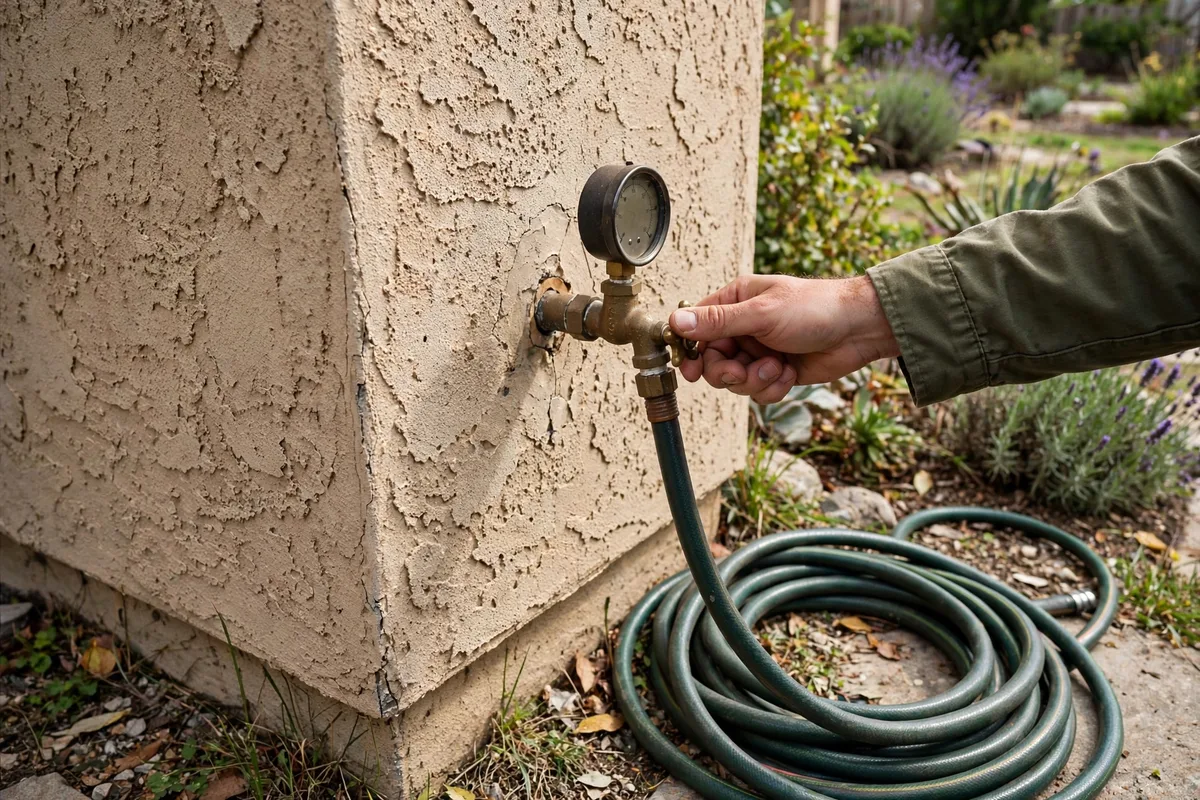
If you notice one of these signs, have the pressure checked during a routine visit. A plumber can read the pressure at an outdoor spigot.
Meter Checks
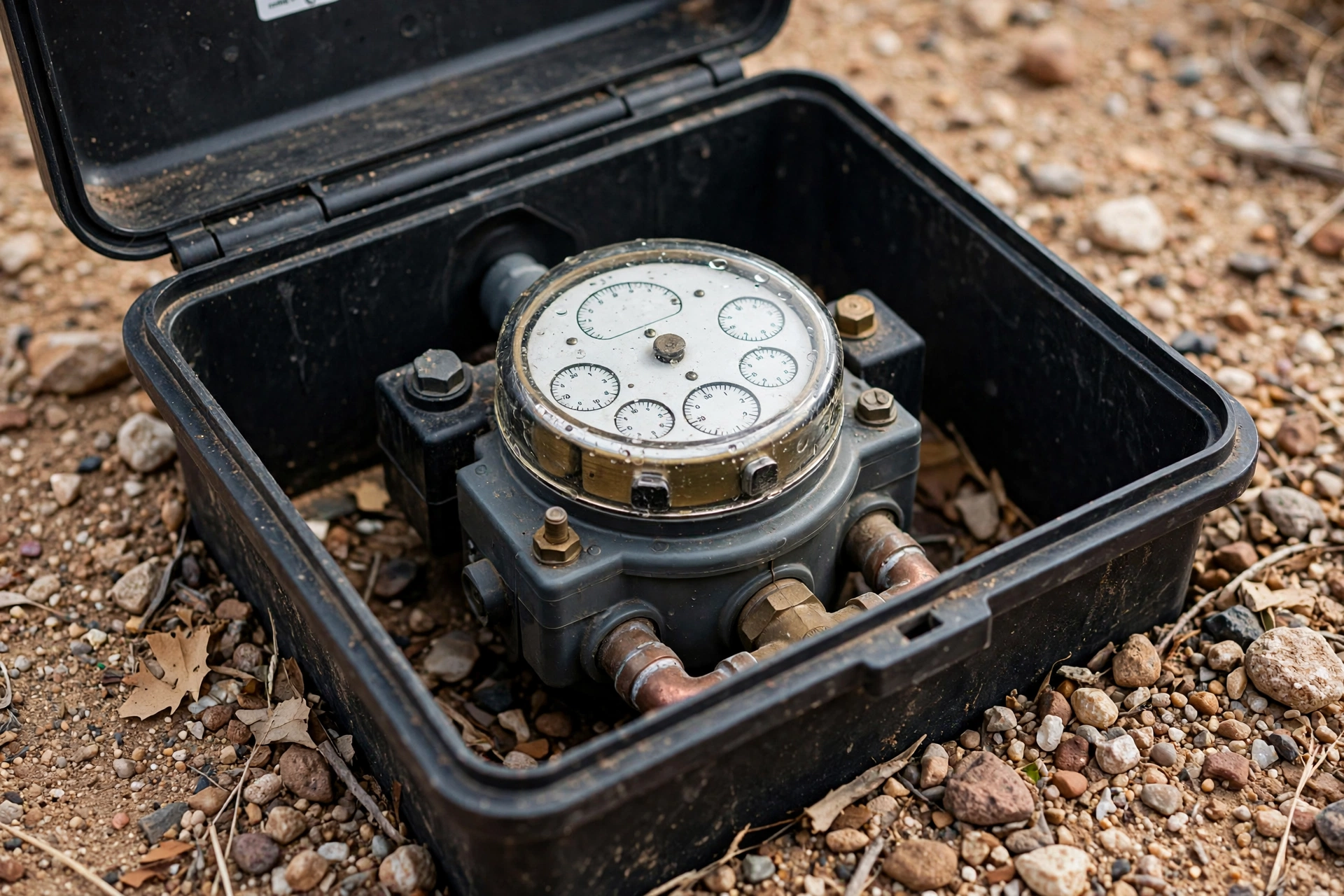
The meter check is the single most useful habit on this page. It takes a few minutes, it needs no tools, and it answers the one question that matters: is water leaving the system somewhere hidden?
Turn off every tap and every appliance that uses water: dishwasher, washer, ice maker, and irrigation. Go to the meter and write down the reading, or take a photo of the dial. Wait an hour or two with no water use, then check again. If the dial moved, water is leaving the system somewhere hidden.
Run this check once a month, and keep a note of each reading. A short log makes a change easy to spot, and it gives us a head start if you call.
Watching the Bill
Your water bill is a monthly leak detector that arrives on its own. A bill that climbs without a change in use is one of the earliest signs of a hidden leak.
Compare each bill with the ones before it. Look at use, not just the total, since rates can shift on their own. A house guest, a new lawn, or a filled pool explains a climb. A climb with no change in the household does not, and it deserves a meter check.
Keep a note of the use on each bill. If the trend climbs for two bills in a row with no change in the household, run a meter check and call us if the dial moves.
What to Check Each Season
Once each season, walk the home and look at the places water shows up first.
Spring
Check hose bibs and outdoor spigots for drips. Check the irrigation valve box for standing water or a damp patch around it.
Summer
Walk the home barefoot and feel for warm patches on tile. Stand in a quiet room and listen near the floor for the sound of running water with every tap off.
Fall
Look under every sink and around every toilet for dampness, swelling, or a musty smell. Check baseboards in bathrooms and the kitchen for swelling or darkening.
Winter
If the home sits empty for a stretch, turn off the main shutoff before you leave. When you return, turn the water back on, run the taps briefly, and check the meter before you settle back in.
Your Prevention Routine, Step by Step
Monthly meter check
Once a month, turn off all water and watch the meter dial. If it moves, call us.
Monthly warm-spot walk
Once a month, walk the home barefoot and feel for warm patches on tile.
Monthly dampness check
Once a month, look under sinks and around toilets and the water heater for dampness.
Seasonal outdoor check
Each season, check hose bibs, outdoor spigots, and the irrigation valve box for drips.
Seasonal bill check
Each season, compare the water bill with earlier bills and note any climb without a change in use.
Call when a sign shows up
Any time a sign shows up, call us and we will run a full meter check and locate the source.
Six steps, a few minutes each, and the home stays watched all year.
What to Expect From the Routine
The routine asks little of you: a monthly meter check, a monthly walk through the home, a seasonal look at the outdoor spigots and the valve box, and a glance at each bill. A leak found in its first weeks soaks less flooring and feeds less mold growth than a leak found months later.
When the routine turns up a sign, the next step is ours. Call us and we will run a full meter check, then locate the leak with listening gear, thermal imaging, pressure testing, and moisture readings.
Routine Check Compared to a Detection Visit
The routine and the detection visit are two halves of one habit. The routine watches. The visit locates.
| Situation | How it works | When it fits | What to expect |
|---|---|---|---|
| Routine check | Meter checks, bill watching, and a seasonal walk through the home. | No signs of a leak, and you want to keep it that way. | A few minutes a month, done by you, with no visit needed. |
| Detection visit | Meter check, listening gear, thermal imaging, pressure testing, and moisture readings. | A sign has shown up and you need to know where the leak sits. | A visit that narrows the leak to one place, then repair planning. |
For the full picture of detection and repair, see the homepage.
Frequently Asked Questions
No. Lines wear over time, and no routine stops that. What a routine does is catch a leak early, while it is still small and before it soaks flooring or feeds mold growth. Early is the whole point of prevention.
A quick check once a month is a good habit. Turn off all water, watch the dial, and check again after an hour or two with no water use. If the dial moved, call us and we will run a full meter check and locate the source.
A bill that climbs a little at a time. A small climb each month is easy to brush off, but a steady climb without a change in use is one of the earliest signs of a hidden leak. A warm patch on tile is another, since you stop noticing it once you get used to it.
Hard water leaves mineral buildup inside lines and wears at joints and bends over time. That wear is one of the local causes of slab leaks in Arizona. You cannot change the water, but you can keep up the routine so a leak gets caught early.
Turning off the main shutoff before a long trip is a sound habit. It stops a leak from running while the home sits empty. When you return, turn the water back on, run the taps briefly, and check the meter before you settle back in.
Call when any sign shows up: a warm floor, the sound of running water with taps off, a damp patch, a bill that jumps, or a meter that moves with all water off. The routine tells you something is wrong. Detection tells you where it is.
Last updated: October 16, 2026.