Slab Leak Detection & Repair Across Arizona
A hidden leak under your slab can soak flooring, warp wood, and feed mold growth before you ever see standing water. We find the leak, show you the fix that fits, and repair it with as little disruption as possible.
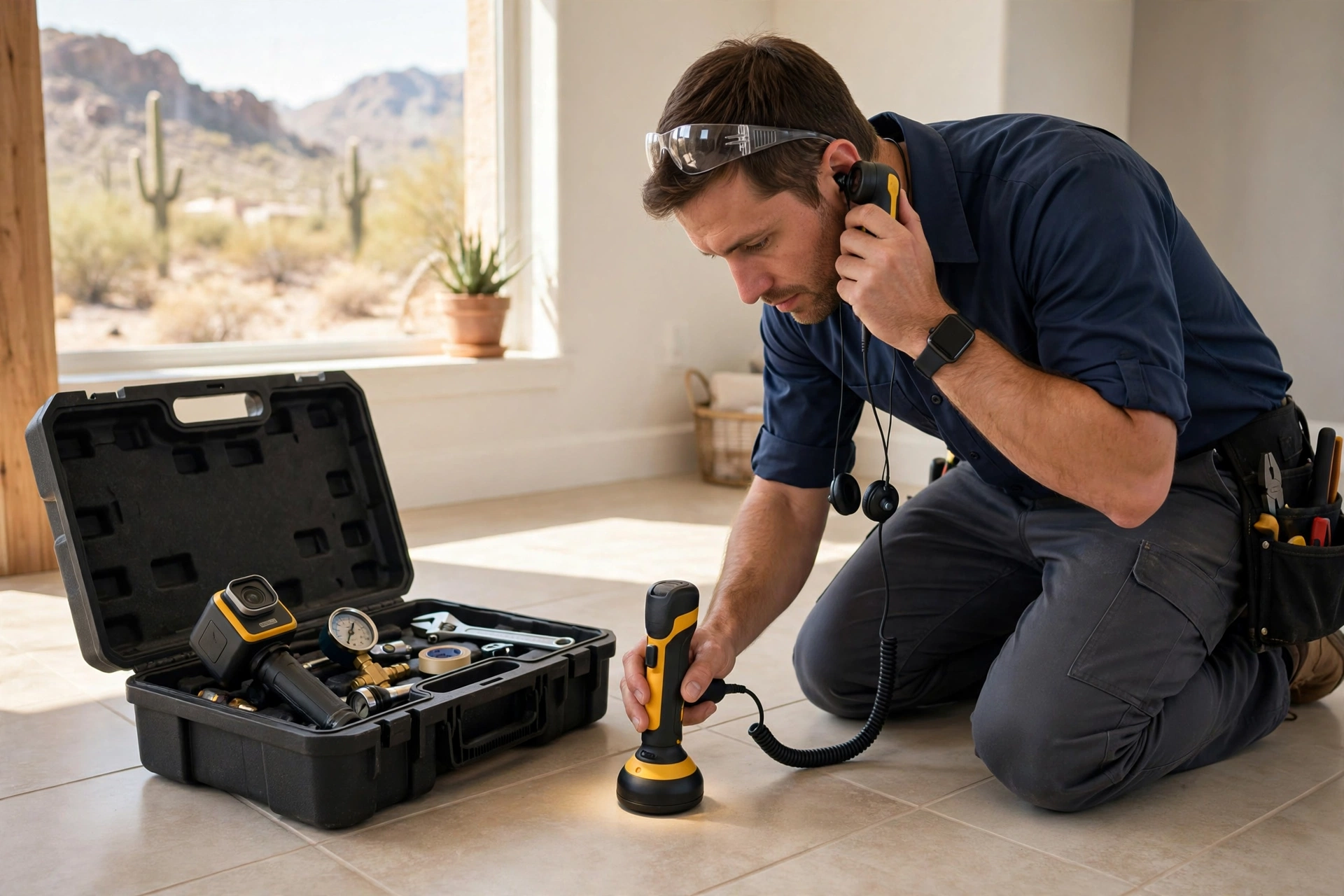
A slab leak is a leak in a water line that runs under or through the concrete slab beneath your home. Because the line sits out of sight, the leak can run for days or weeks before it shows. Water spreads through soil and concrete, so the damp patch on your floor may sit some distance from the leak itself. Detection comes first: we narrow the leak to one place with listening gear, thermal imaging, pressure testing, and moisture readings, and then we match the repair to what we found.
This page covers the whole job: the signs, why Arizona ground and water wear on buried lines, how we locate a leak without opening the slab, the four repair options, the steps we follow, and the cities we serve. If you already know you need one repair option, jump to the service page for it: slab leak spot repair, water-line reroute and repiping, commercial leak detection, pre-purchase leak inspection, or slab leak prevention.
Signs You May Have a Slab Leak
A slab leak rarely announces itself with a puddle. It shows up as small changes around the home that are easy to brush off one by one. If two or more show up at the same time, call us for a meter check before any repair work starts.
- A warm spot on the floor. A leak on a hot water line warms the concrete and the flooring above it. A patch that feels warm while the rest feels cool is a classic sign.
- The sound of running water when every tap is off. A faint hiss or trickle with no tap open means water is moving somewhere it should not be.
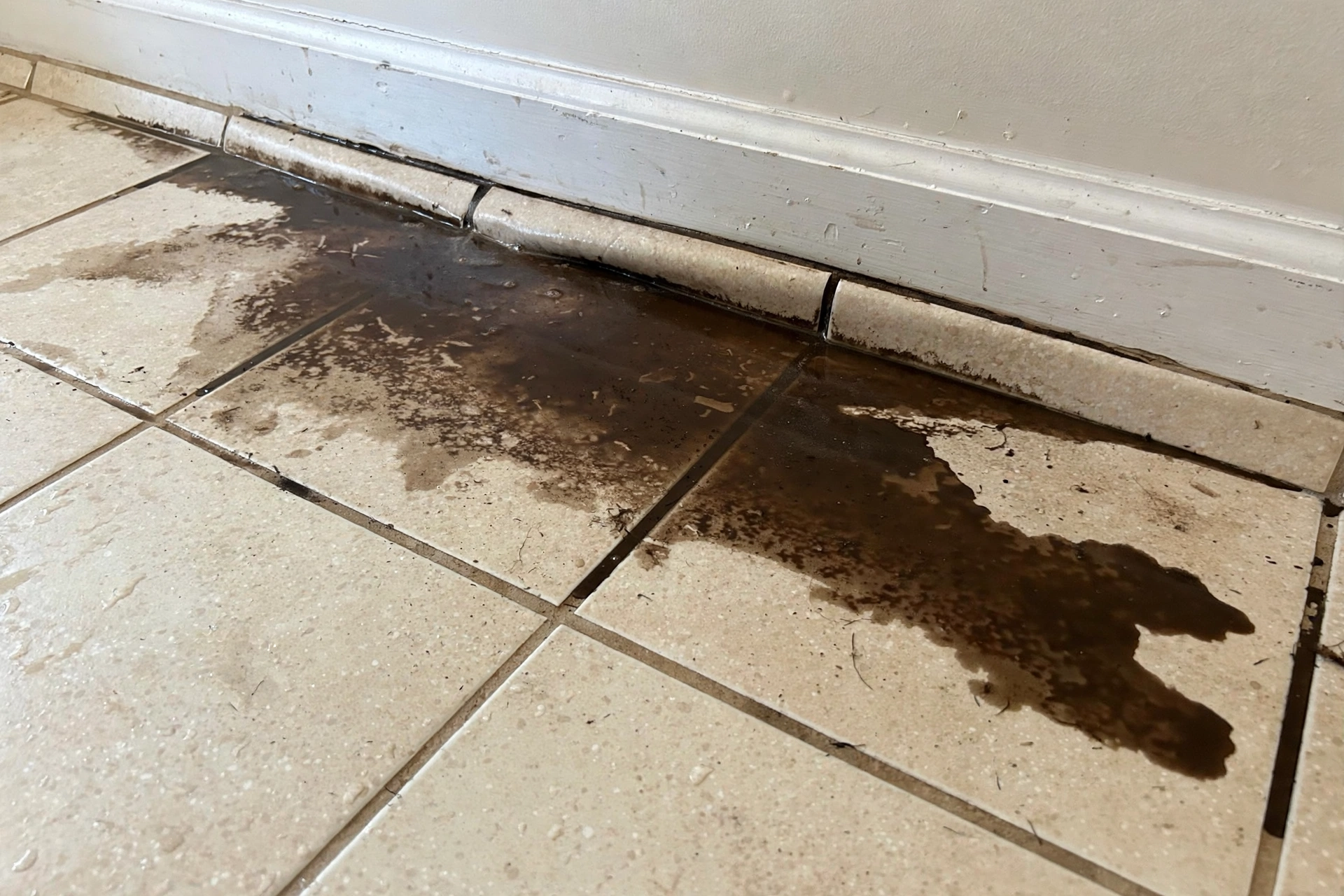
- A damp or stained patch on flooring. Tile may darken, grout may stay damp, carpet may feel cool and spongy underfoot, and wood may cup or swell.
- A water bill that climbs without a change in use. If use jumps while your habits stay the same, a hidden leak is a likely cause.
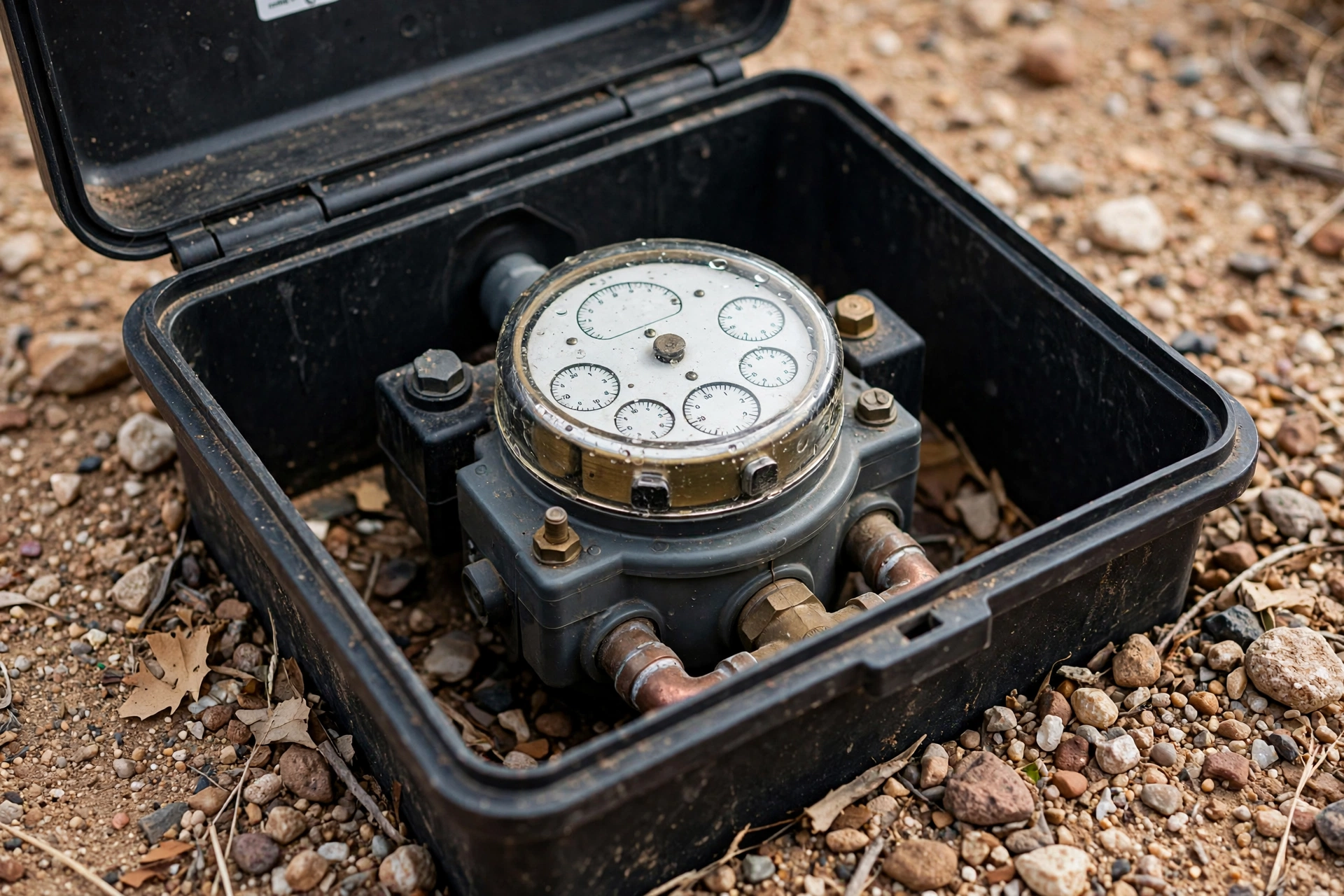
- A meter that keeps moving with all water off. Turn off every tap and appliance that uses water, then watch the meter dial. If it still moves, water is leaving the system somewhere hidden.
- Low pressure at a tap. A leak bleeds off pressure before water reaches the tap. If one tap runs weak while others run fine, its line may be losing water under the slab.
- A musty smell near the floor. Water trapped under flooring feeds mold growth in grout, carpet backing, and baseboards. A damp, earthy smell that will not clear points to moisture below.
- New cracks near a damp area. Water softens soil under the slab, and a slab that loses support can shift and crack. A fresh crack beside a damp patch deserves a fast check.
Why Arizona Homes See Slab Leaks
Across Arizona, homes commonly sit on concrete slabs with water lines run beneath them, in direct contact with soil, concrete, and heat. Four local conditions wear on those lines over time. None of this means a leak is your fault. It means a slab leak is a plumbing problem with local causes.
Hard water
Arizona water runs hard in many areas, carrying dissolved minerals that leave buildup inside lines and wear at joints and bends. That wear can thin a line until a small opening forms and water starts to escape under the slab.
Expansive clay soil
Parts of Arizona sit on clay soil that swells when wet and shrinks as it dries, shifting the ground under a slab and stressing buried lines. A line that flexes again and again can crack at a joint or a bend.
Long hot summers
Long hot summers warm the ground, the slab, and the lines within it, and lines expand and contract as temperatures swing between day and night and between seasons. That steady movement adds wear at fittings and joints.
Aging copper lines
Older homes often carry copper water lines. Water moving through a line over a long stretch wears the inner wall, and hard water adds to that wear. A thin spot can open into a pinhole leak under the slab.
How Detection Works
Detection answers one question: exactly where is the water coming out? We combine five methods so no single reading decides the repair, and together they point to one place.
1. Acoustic listening
A leak under pressure makes noise as water escapes through a small opening. We place a sensitive listening device on the floor and move it across the rooms where the signs show. The sound grows louder as we near the leak and fades as we move away. A quiet home helps, so we ask that dishwashers, washers, and other noisy appliances stay off during this part of the visit.
2. Thermal imaging
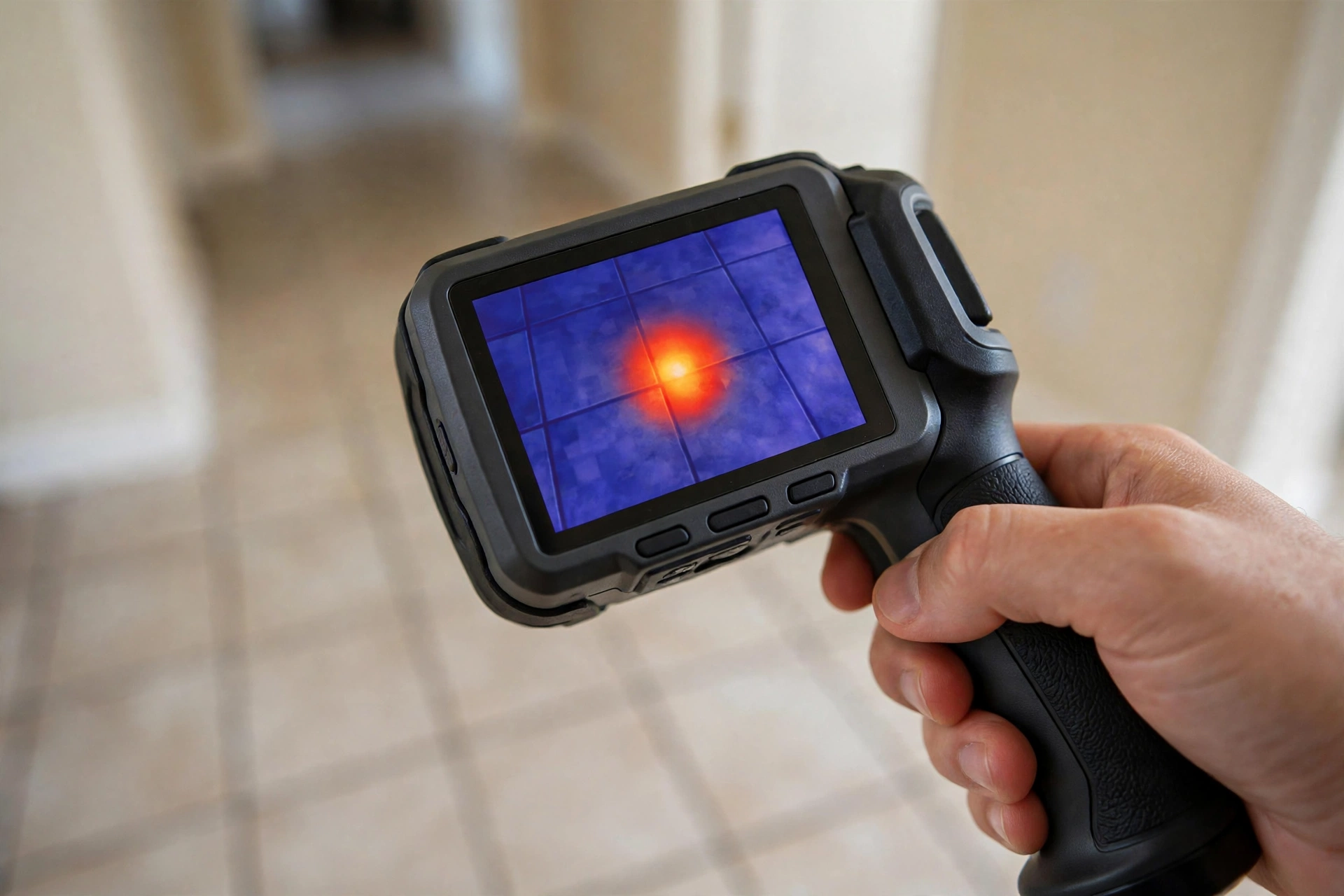
A thermal camera reads surface warmth across the floor and shows it as a color picture. A leak on a hot water line warms the concrete above it, so it shows up as a warm patch. Thermal imaging suits hot lines. Cold lines do not warm the floor the same way, so a cold-line leak calls for the other methods to carry the search.
3. Pressure testing
Pressure testing tells us which line leaks, even when the leak itself stays hidden. We isolate one section of line at a time and watch whether it holds pressure. A section that loses pressure holds the leak, while a section that holds steady is sound.
4. Moisture assessment
A moisture meter reads how much dampness sits in flooring and concrete. We take readings across the rooms where signs show and compare damp zones with dry ones. The pattern maps how far water has spread and points back toward the source.
5. Camera inspection
When a drain line under the slab is the suspect, a small camera travels through the line and shows cracks, breaks, and low spots where water pools. Camera work suits drain lines, not supply lines, since supply lines are too narrow for a camera.
How Repair Works
Once we know where the leak sits, we walk through the repair options that fit your leak. The right fix depends on where the line runs, how many times it has leaked, what sits above it, and what the line looks like overall.
Spot Repair
We open a small area of slab at the leak and replace the damaged section of line. Spot repair fits a single leak in a line that is otherwise sound and easy to reach.
Reroute & Repiping
We run a new line through walls or the attic and cap the old line under the slab. A reroute fits a line that keeps leaking or sits where a spot fix will not hold.
Tunnelling
We dig a tunnel from outside, under the slab, to reach the leak from below. Tunnelling fits leaks under finished floors where opening from above would tear up a lot of flooring.
Epoxy Lining
We line the inside of the existing pipe to seal small leaks from within. Lining fits small leaks in a line that is otherwise sound, where opening the slab would cause more harm than the leak itself.
Our Process, Step by Step
Tell us the signs
Call us and describe the signs you have seen, such as a warm floor, a damp patch, or a bill that climbed.
Meter check and walkthrough
We visit your home, run a meter check with all water off, and walk the rooms where the signs show.
Locate the leak
We locate the leak with listening gear, thermal imaging, pressure testing, and moisture readings, then mark the spot.
Pick the fix
We walk through the repair options that fit your leak, and you pick the one you want.
Repair and patch back
We carry out the repair, a spot fix, a reroute, a tunnel, or a lining, and we patch back what we opened.
Confirm the leak is sealed
We finish with a second meter check, a pressure check, and a run of the taps to confirm the leak is sealed.
Which Fix Fits Your Leak?
The fix that fits your leak depends on what we find during detection, and we will walk through it with you before any repair work starts.
| Fix | How it works | When it fits | What to expect |
|---|---|---|---|
| Spot repair | Open a small area of slab at the leak and replace the damaged section. | One leak in a line that is otherwise sound and easy to reach. | A small opening in the slab at the leak, then patching back. |
| Reroute | Run a new line through walls or the attic and cap the old line. | A line that keeps leaking, or a spot fix that will not hold. | Work in walls and the attic, with the slab left closed. |
| Tunnelling | Dig a tunnel from outside, under the slab, to reach the leak from below. | A leak under finished floors where opening from above would tear up a lot of flooring. | Digging outside, then work in the tunnel under the slab. |
| Epoxy lining | Line the inside of the existing pipe to seal small leaks from within. | Small leaks in a line that is otherwise sound. | Access through existing openings, with the slab left closed. |
Service Areas Across Arizona
We serve homes across Arizona from our base in Tempe. These are the cities we visit most often. See all service areas for the full list.
Frequently Asked Questions
Look for a warm spot on the floor, the sound of running water when every tap is off, a damp or stained patch on flooring, or a water bill that climbs without a change in how you use water. A meter that keeps moving with all water off is another strong sign. One sign alone does not prove a leak, so call us and we will run a meter check and locate the source before any repair work starts.
We start with a meter check and a walk through the home to note the signs you have seen. Then we use listening gear, thermal imaging, pressure testing, and moisture readings to narrow the leak to one place. Detection does not open the slab. The goal is a clear location so the repair opens as little as possible.
No. Detection works from above the floor with listening gear, thermal imaging, pressure testing, and moisture readings. The slab only opens during repair, and only as much as the chosen fix needs. A reroute or a lining avoids opening the slab at all.
Turn off the main water shutoff if water is spreading across the floor. Note when you first saw the signs and which rooms they show in. Then call us at (480) 681-1950. Do not pull up flooring or open the slab yourself, since that can spread water and make the leak harder to pinpoint.
It depends on the fix and on how easy the leak is to reach. A spot repair often wraps up in a single visit. A reroute or a tunnel takes longer because the work covers more of the home or the ground outside it. When we walk through your options, we will lay out the sequence of the work so you know what to expect.
It depends on the fix you choose. A spot repair opens a small area of slab at the leak, and we patch it back when the pipe work is done. A reroute runs a new line through walls or the attic, so the slab stays closed. Tunnelling reaches the leak from outside, so the floor above stays in place. We work to keep any opening as small as the fix allows.
We serve homes across Arizona, including Phoenix, Tucson, Mesa, Gilbert, Chandler, Scottsdale, Tempe, and Flagstaff. If your town sits outside that list, call us and we will tell you whether we can reach you. The service areas page lists every city we cover.
Clear the area around any warm or damp spot so we can reach the floor. Set aside a recent water bill so we can see the change in use. Write down when you first noticed each sign. If you know where your main water shutoff sits, point it out when we arrive so we can start with a meter check right away.
Last updated: October 16, 2026.