Can a Slab Leak Cause Mold?
Yes, a slab leak can support mold growth, because it keeps concrete, flooring, and baseboards damp over time, and mold grows where moisture lingers. We do leak detection and repair, not mold work, so when mold shows up, a mold specialist is the right call for that part of the job.
How does a slab leak lead to mold?
Mold grows where moisture lingers. A slab leak feeds moisture into concrete, flooring, and the base of walls day after day. That steady dampness gives mold what it needs to take hold in places you may not see, such as under flooring, behind baseboards, or inside a wall cavity near the floor.
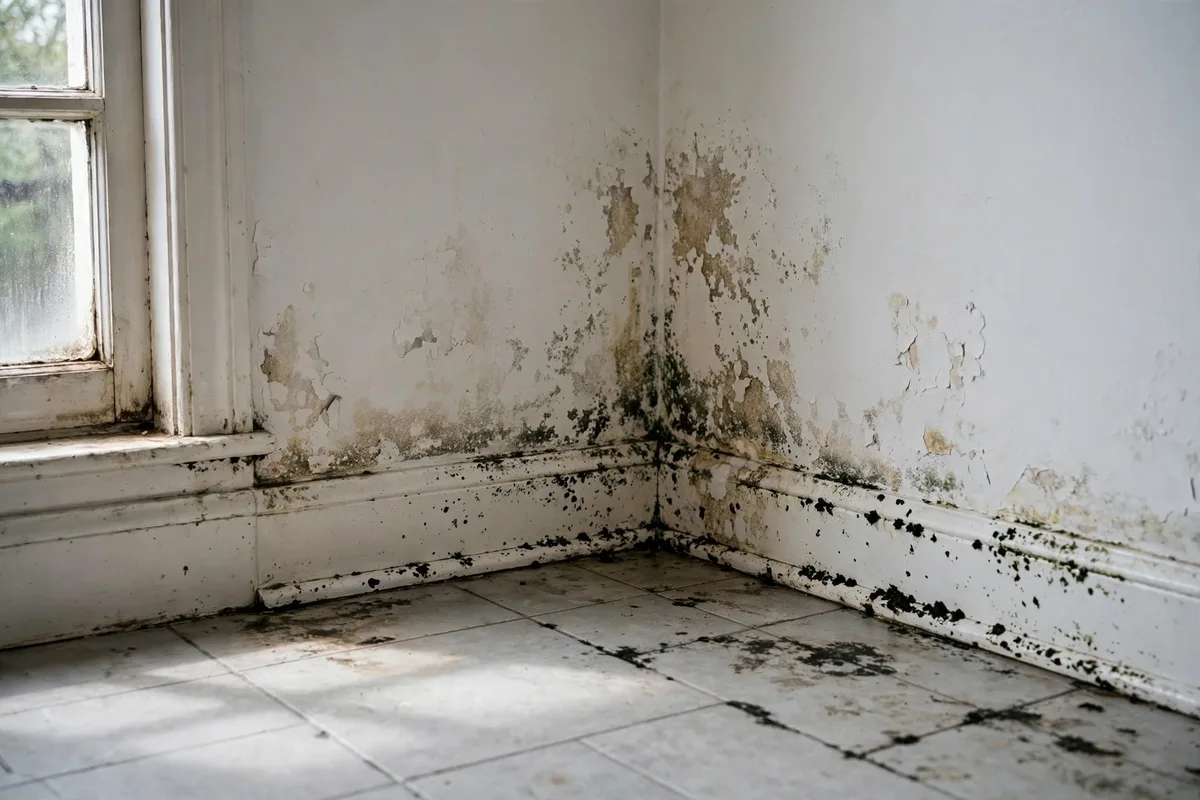
Arizona homes stay dry most of the year, so a damp patch that will not dry is unusual. When a leak keeps one area damp for days or weeks, the conditions under that floor stay wet even while the rest of the home feels dry. That contrast is what lets mold start in one spot while the rest of the home stays clean.
The leak does not plant mold by itself. Mold spores are present in most indoor air at low levels. What the leak provides is the moisture that lets those spores grow. Stop the moisture, and you remove the condition that lets growth continue.
Where does mold show up after a slab leak?
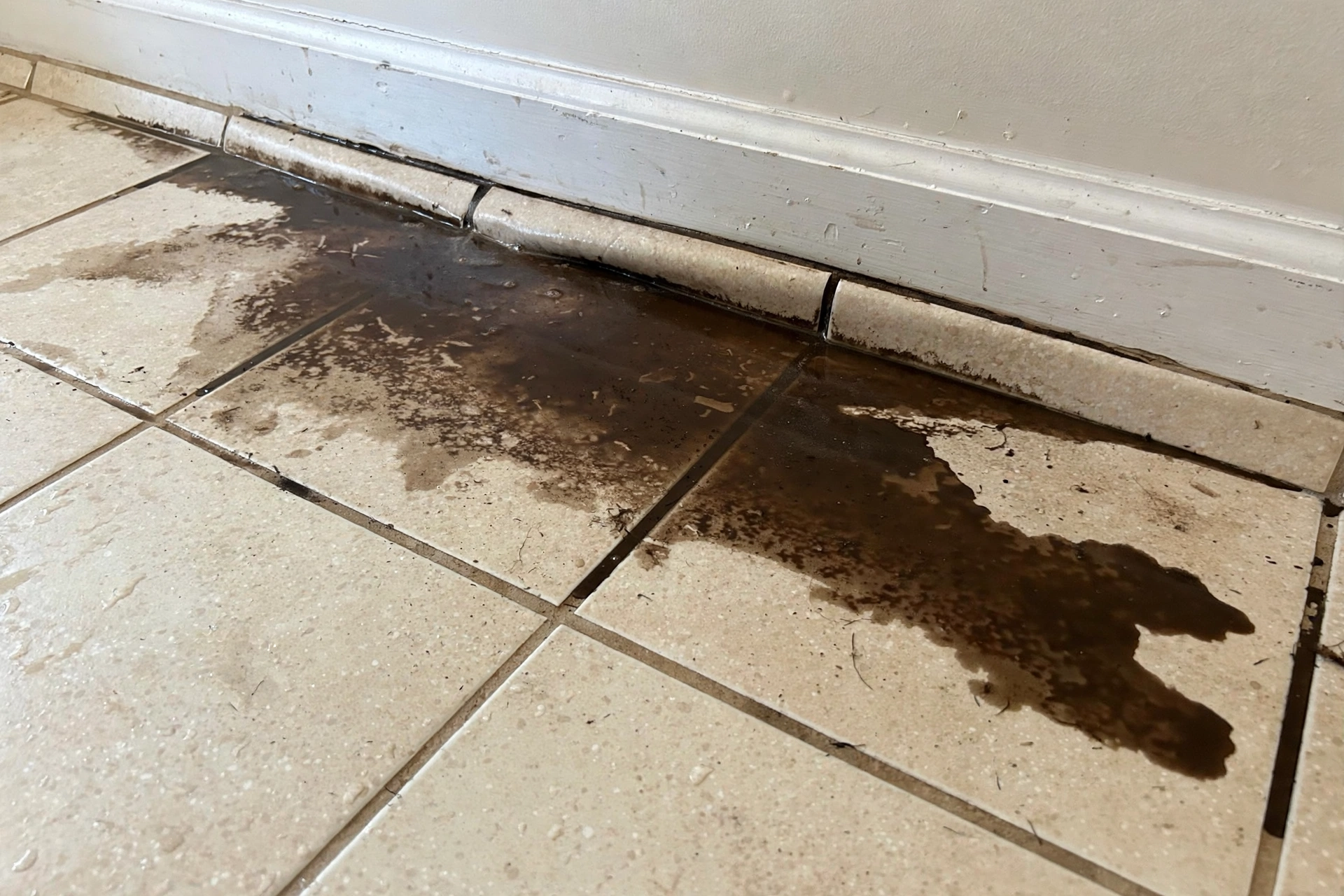
After a slab leak, mold most often shows up where moisture collects and air moves slowly. Look along baseboards, in corners, under rugs, behind furniture that sits against a damp wall, and inside closets near the leak. Carpet that stayed damp, grout that stayed dark, and wood that swelled are all spots where growth can start.
Some growth stays hidden. Mold can grow under tile, behind a baseboard, or inside a wall cavity where you cannot see it. A musty smell that will not go away, even after you dry the surface, can mean growth is still active out of sight. A smell that returns after cleaning is worth taking seriously.
The location of the growth often tracks the path of the water. Water from a slab leak spreads through concrete and soil, so the damp area can be wider than the leak point itself. Growth may show up a short distance from the leak, along the path the water traveled.
What signs point to mold after a leak?
Visible signs include dark or greenish spots on a baseboard, grout, or wall, fuzzy patches on wood or drywall near the floor, and discoloration that keeps coming back after cleaning. The spots may look like dirt at first, so look closely at damp areas and compare them to dry areas nearby.
Smell is often the first sign. A musty, earthy smell in one room, or a smell that gets stronger when the air conditioner runs, can mean growth is active behind a surface. If the smell fades when you leave the room and returns when you come back, the source is likely in that room.
Health signs can also show up, such as sneezing, a stuffy nose, or itchy eyes when you spend time in the damp room. Those signs can come from many causes, so they do not prove mold on their own. Paired with dampness and a musty smell, they add weight to the picture. Talk with a health care provider about any symptoms that worry you.
What should I do if I see mold after a leak?
Start by stopping the water. A slab leak that keeps feeding moisture will keep feeding growth, so detection and repair come first. Once the leak is fixed, the area can dry, and a mold specialist can assess what remains.
Do not try to scrub a large patch of mold yourself. Scrubbing can spread spores into the air and onto clean surfaces. Small surface spots on hard tile can be wiped with a damp cloth, but growth on drywall, wood, carpet, or insulation needs a specialist. Keep the room aired out and keep people with breathing concerns out of the room until it is assessed.
Take photos of what you see, with dates, before you touch anything. Photos help the specialist see how the growth looked before any cleaning, and they keep a record of the leak and its effects. Do not seal the area with paint or caulk to hide it, because that traps moisture behind the surface.
When should I bring in a mold specialist?
Bring in a mold specialist when you see visible growth, when a musty smell will not go away after the area dries, or when growth covers more than a small patch on a hard surface. Also bring one in when growth sits on drywall, wood, carpet, or insulation, because those materials hold moisture and can hide growth inside.
A mold specialist assesses how far the growth has spread, what materials it has reached, and what drying and cleanup the area needs. That work is separate from leak repair. We handle the leak side: detection, repair, and a written findings report. The specialist handles the mold side.
If you are unsure whether you need a specialist, a phone call to one is a good step. Describe the dampness, the smell, and the size of the patch, and ask what they advise. A short call can keep you from guessing.
How do I keep mold from coming back after the leak is fixed?
Dry the area fully after the repair. Concrete and wood can hold moisture for days after the leak stops, so give the area time and airflow. A fan and open doors help, and a dehumidifier can help in a closed room. Do not lay new flooring or close up a wall until the area reads dry.
Watch the spot for a few weeks after the repair. Check the baseboard, grout, and floor for dampness or smell. If dampness returns, the leak may not be fully fixed, or a second leak may be active. Call back for a check rather than waiting.
Going forward, watch for the early signs in our guide to the 7 signs you have a slab leak. Catching the next leak early keeps moisture from lingering long enough for growth to start.
Frequently Asked Questions
Yes. A slab leak keeps concrete, flooring, and baseboards damp over time, and mold grows where moisture lingers. The leak provides the moisture that lets mold take hold.
Growth can start after moisture lingers for days. The exact timing depends on the amount of water, the materials, and the airflow. A leak that runs unnoticed gives growth more time to take hold.
No. We do leak detection and repair, not mold work. When mold shows up, a mold specialist is the right call for assessment and cleanup.
Small surface spots on hard tile can be wiped with a damp cloth. Growth on drywall, wood, carpet, or insulation, or a large patch, needs a mold specialist. Scrubbing a large patch can spread spores.
Fixing the leak stops new moisture, which removes the condition that lets growth continue. Growth that is already present still needs assessment and cleanup by a mold specialist, plus full drying of the area.
Last updated: October 16, 2026.